These 100 simple English sentences cover the situations you meet every day - greetings, home, work, shopping, travel and goodbyes. Each one has its Hindi meaning and the moment you would actually say it. Learn five a day, say them aloud, and use them the same day. That is the whole method.
If you are learning English, one of the easiest ways to improve is to start with simple English sentences you can actually use every day. Below are 100 common English sentences with Hindi meanings for conversations at home, work, shopping, travel and other everyday situations.
Why should you learn simple English sentences for daily use?
Knowing individual English words is useful, but words alone do not help much when you need to speak.
For example, knowing help, you and please is different from being able to quickly say: Can you help me, please?
Learning complete sentences helps you understand how words work together, so you can respond without building the sentence from scratch each time. If you want the grammar behind that, our guide to English grammar sentence structure explains how a simple sentence is put together — but you do not need it to start.
For Hindi-first learners, learning English alongside familiar Hindi meanings makes the transition easier. The goal is not to translate every sentence forever. The goal is to understand the pattern and gradually use the English sentence naturally.
What are 100 simple English sentences for daily use?
Here are 100 simple English sentences grouped by situation. The third column tells you the moment to use each one — that is what turns a list you read into sentences you actually say.
What are some simple English sentences for greetings?
| # | English sentence | Hindi meaning | Say it when |
|---|---|---|---|
| 1 | Good morning. | सुप्रभात। | Before noon |
| 2 | Good afternoon. | नमस्कार / शुभ दोपहर। | Midday greeting |
| 3 | Good evening. | शुभ संध्या। | After sunset |
| 4 | How are you? | आप कैसे हैं? | Meeting anyone |
| 5 | I am fine. | मैं ठीक हूँ। | Replying to that |
| 6 | Long time no see. | बहुत दिनों बाद मिले। | Running into someone |
| 7 | Nice to meet you. | आपसे मिलकर अच्छा लगा। | First time meeting |
| 8 | What is your name? | आपका नाम क्या है? | Asking politely |
| 9 | My name is Rahul. | मेरा नाम राहुल है। | Introducing yourself |
| 10 | Where are you from? | आप कहाँ से हैं? | Making conversation |
Practice tip: replace “Rahul” with your own name and say sentence 9 aloud several times.

What English sentences can you use at home?
| # | English sentence | Hindi meaning | Say it when |
|---|---|---|---|
| 11 | I am at home. | मैं घर पर हूँ। | Answering the phone |
| 12 | I am getting ready. | मैं तैयार हो रहा/रही हूँ। | Someone is waiting |
| 13 | Please come inside. | कृपया अंदर आइए। | Welcoming a guest |
| 14 | Please sit down. | कृपया बैठ जाइए। | Offering a seat |
| 15 | Please switch off the fan. | कृपया पंखा बंद कर दीजिए। | Leaving a room |
| 16 | I need some rest. | मुझे थोड़ा आराम चाहिए। | End of a long day |
| 17 | Did you eat something? | क्या तुमने कुछ खाया? | Checking on someone |
| 18 | I am making breakfast. | मैं नाश्ता बना रहा/रही हूँ। | Morning at home |
| 19 | The food is ready. | खाना तैयार है। | Calling everyone |
| 20 | I will be back soon. | मैं जल्दी वापस आऊँगा/आऊँगी। | Leaving the house |
What simple English sentences can you use at work?
| # | English sentence | Hindi meaning | Say it when |
|---|---|---|---|
| 21 | I am going to work. | मैं काम पर जा रहा/रही हूँ। | Leaving in the morning |
| 22 | I have a meeting today. | आज मेरी मीटिंग है। | Explaining your day |
| 23 | I am working on it. | मैं इस पर काम कर रहा/रही हूँ। | Asked for a status |
| 24 | I will finish it today. | मैं इसे आज पूरा कर दूँगा/दूँगी। | Committing to a deadline |
| 25 | I need one more day. | मुझे एक दिन और चाहिए। | Asking for an extension |
| 26 | Could you explain this? | क्या आप इसे समझा सकते हैं? | You did not follow |
| 27 | I have a question. | मेरा एक सवाल है। | In a meeting |
| 28 | I understand. | मैं समझ गया/गई। | Confirming |
| 29 | I don't understand. | मुझे समझ नहीं आया। | Ask before it is too late |
| 30 | Let me check. | मुझे जाँच करने दीजिए। | You are not sure yet |
A useful pattern to remember. You can use I am working on… with any task: I am working on the report. I am working on the presentation. I am working on the project. Learning the pattern is worth more than memorising one sentence.
Preparing for something bigger than a daily standup? Our guide to English for job interviews takes these further.
Which English sentences can you use when asking for help?
| # | English sentence | Hindi meaning | Say it when |
|---|---|---|---|
| 31 | Can you help me? | क्या आप मेरी मदद कर सकते हैं? | Anywhere, with anyone |
| 32 | Please help me. | कृपया मेरी मदद कीजिए। | More urgent |
| 33 | Can you show me? | क्या आप मुझे दिखा सकते हैं? | You need a demonstration |
| 34 | Can you repeat that? | क्या आप उसे दोबारा कह सकते हैं? | You missed it |
| 35 | Please speak slowly. | कृपया धीरे बोलिए। | They are speaking too fast |
| 36 | Sorry, I did not catch that. | माफ़ कीजिए, मैं समझ नहीं पाया/पाई। | On a call or in noise |
| 37 | What does this mean? | इसका क्या मतलब है? | A new word or form |
| 38 | How do I do this? | मैं यह कैसे करूँ? | Asking for steps |
| 39 | Where can I find it? | मुझे यह कहाँ मिल सकता है? | Looking for something |
| 40 | Thank you for your help. | आपकी मदद के लिए धन्यवाद। | Closing the request |
These sentences are especially useful while you are still building confidence. You do not need complicated vocabulary to communicate clearly.

What simple English sentences can you use while shopping?
| # | English sentence | Hindi meaning | Say it when |
|---|---|---|---|
| 41 | How much is this? | यह कितने का है? | Any shop |
| 42 | Can you make it a little less? | थोड़ा कम कर दीजिए। | Bargaining |
| 43 | Do you have this in another size? | क्या यह दूसरे साइज़ में है? | Clothes or shoes |
| 44 | Do you have another colour? | क्या इसका कोई दूसरा रंग है? | Choosing |
| 45 | I like this one. | मुझे यह पसंद है। | Narrowing down |
| 46 | I don't like this one. | मुझे यह पसंद नहीं है। | Saying no politely |
| 47 | Can I try this on? | क्या मैं इसे पहनकर देख सकता/सकती हूँ? | Before buying clothes |
| 48 | Please give me a bill. | कृपया बिल दे दीजिए। | After paying |
| 49 | I will take this. | मैं यह ले लूँगा/लूँगी। | Deciding |
| 50 | Do you accept UPI? | क्या आप UPI लेते हैं? | Before paying |
Which English sentences are useful when travelling?
| # | English sentence | Hindi meaning | Say it when |
|---|---|---|---|
| 51 | Where is the railway station? | रेलवे स्टेशन कहाँ है? | Asking a stranger |
| 52 | Where is the bus stop? | बस स्टॉप कहाँ है? | In a new area |
| 53 | How can I get there? | मैं वहाँ कैसे पहुँच सकता/सकती हूँ? | Asking for the route |
| 54 | Is it far from here? | क्या यह यहाँ से दूर है? | Checking distance |
| 55 | How long will it take? | इसमें कितना समय लगेगा? | Planning your time |
| 56 | Please stop here. | यहीं रोक दीजिए। | Getting off an auto or cab |
| 57 | Please take me to this address. | कृपया मुझे इस पते पर ले चलिए। | Showing a driver your phone |
| 58 | I am looking for this place. | मैं इस जगह को ढूँढ रहा/रही हूँ। | You are lost |
| 59 | Where is the nearest chemist? | सबसे पास की दवा की दुकान कहाँ है? | You need medicine |
| 60 | Thank you for the directions. | रास्ता बताने के लिए धन्यवाद। | After someone helps |
What simple English sentences can you use in everyday conversations?
| # | English sentence | Hindi meaning | Say it when |
|---|---|---|---|
| 61 | What are you doing? | आप क्या कर रहे हैं? | Starting a chat |
| 62 | Where are you going? | आप कहाँ जा रहे हैं? | Meeting someone on the way |
| 63 | What happened? | क्या हुआ? | Something seems wrong |
| 64 | Are you okay? | क्या आप ठीक हैं? | Checking on someone |
| 65 | I am on my way. | मैं रास्ते में हूँ। | Running late |
| 66 | I will call you later. | मैं आपको बाद में कॉल करूँगा/करूँगी। | You cannot talk now |
| 67 | Please wait a moment. | कृपया एक मिनट रुकिए। | You need a second |
| 68 | Please share it on WhatsApp. | कृपया इसे व्हाट्सएप पर भेज दीजिए। | Asking for a file or photo |
| 69 | I will let you know. | मैं आपको बता दूँगा/दूँगी। | You will confirm later |
| 70 | See you tomorrow. | कल मिलते हैं। | Leaving for the day |
Which English sentences can help you express your feelings?
| # | English sentence | Hindi meaning | Say it when |
|---|---|---|---|
| 71 | I am happy. | मैं खुश हूँ। | Good news |
| 72 | I am excited. | मैं उत्साहित हूँ। | Looking forward to something |
| 73 | I am worried. | मैं चिंतित हूँ। | Sharing a concern |
| 74 | I am feeling better now. | अब मैं बेहतर महसूस कर रहा/रही हूँ। | After being unwell |
| 75 | I am not feeling well. | मेरी तबीयत ठीक नहीं है। | Telling someone you are ill |
| 76 | I am a little nervous. | मैं थोड़ा घबराया हुआ/घबराई हुई हूँ। | Before an interview or exam |
| 77 | I am tired today. | मैं आज थका हुआ/थकी हुई हूँ। | Declining politely |
| 78 | I am proud of you. | मुझे आप पर गर्व है। | Someone did well |
| 79 | Don't worry. | चिंता मत कीजिए। | Reassuring someone |
| 80 | Everything will be fine. | सब ठीक हो जाएगा। | Comforting someone |
What English sentences can you use to make requests politely?
| # | English sentence | Hindi meaning | Say it when |
|---|---|---|---|
| 81 | Please give me some water. | कृपया मुझे थोड़ा पानी दीजिए। | At home or a restaurant |
| 82 | Please open the door. | कृपया दरवाज़ा खोलिए। | Simple request |
| 83 | Please close the window. | कृपया खिड़की बंद कीजिए। | In a bus or train |
| 84 | Can I use your phone? | क्या मैं आपका फोन इस्तेमाल कर सकता/सकती हूँ? | Your battery is dead |
| 85 | Can I ask you something? | क्या मैं आपसे कुछ पूछ सकता/सकती हूँ? | Before a question |
| 86 | Could you wait for me? | क्या आप मेरे लिए इंतज़ार कर सकते हैं? | You need a few minutes |
| 87 | Please send it to me. | कृपया इसे मुझे भेज दीजिए। | Asking for a document |
| 88 | Please call me when you arrive. | पहुँचने पर मुझे कॉल कीजिए। | Making a plan |
| 89 | Let me know if you need anything. | अगर आपको किसी चीज़ की ज़रूरत हो तो मुझे बताइए। | Offering help |
| 90 | May I come in? | क्या मैं अंदर आ सकता/सकती हूँ? | At a door or cabin |
What are some simple English sentences for ending a conversation?
| # | English sentence | Hindi meaning | Say it when |
|---|---|---|---|
| 91 | It was nice talking to you. | आपसे बात करके अच्छा लगा। | Wrapping up warmly |
| 92 | I have to go now. | मुझे अब जाना होगा। | Leaving politely |
| 93 | Good night. | शुभ रात्रि। | End of the day |
| 94 | See you soon. | जल्द मिलते हैं। | No fixed date |
| 95 | Let's meet this weekend. | इस वीकेंड मिलते हैं। | Making a plan |
| 96 | Have a nice day. | आपका दिन शुभ हो। | Ending any conversation |
| 97 | Take care. | अपना ख्याल रखना। | Warm goodbye |
| 98 | Have a safe journey. | आपकी यात्रा सुरक्षित हो। | Someone is travelling |
| 99 | Talk to you tomorrow. | कल आपसे बात करता/करती हूँ। | Ending a phone call |
| 100 | Goodbye. | अलविदा। | Formal ending |
Seven mistakes Indian speakers make with these sentences
These are not grammar-book errors. They are the ones that sound off to a client or an interviewer, and almost everyone makes them.
| Commonly said | Say this instead | Why |
|---|---|---|
| I am having a fever. | I have a fever. | Verbs about states do not take the -ing form. |
| I have a doubt. | I have a question. | A doubt means you do not believe something. |
| Please revert back. | Please reply. | Revert means to go back to an earlier state. |
| What is your good name? | What is your name? | A direct translation of शुभ नाम. It confuses listeners outside India. |
| I am agree. | I agree. | Agree is already the verb, so it does not need am. |
| Discuss about it. | Discuss it. | Discuss does not take about. |
| Today morning I called. | This morning I called. | Use this morning, this evening, last night. |
The first one trips up more learners than any other. If tenses are where you get stuck, our guide to English grammar tenses covers it properly.
How can you learn these simple English sentences faster?
Reading these 100 sentences once is not enough. The improvement comes when you use them while speaking. Try this daily routine.
Step 1: Learn five sentences
Pick only five each day. For example: I am on my way. I will call you later. Can you help me? I don’t understand. Please speak slowly.
Step 2: Say each sentence aloud
Read each one several times, out loud. Not silently. The goal is to make your mouth comfortable with the sentence. If particular sounds keep tripping you up, our guide on English pronunciation difficulty covers the ones Hindi speakers find hardest.
Step 3: Change the sentence
Take one sentence and make variations. From “I am working on it” you get: I am working on the report. I am working on the project. I am working on my presentation. This teaches you patterns, not just sentences.
Step 4: Use them in real conversations
Use at least one new sentence during your day — with a colleague, ordering food, with a shopkeeper, asking directions, with friends, at home. The more often you use a sentence, the easier it becomes to recall.
- talking to a colleague
- ordering food
- speaking with a shopkeeper
- asking for directions
- talking to friends and family
Should you translate Hindi into English while speaking?
Translation helps beginners understand meaning, but you should gradually move away from translating every sentence in your head.
Instead of thinking “मुझे थोड़ा पानी चाहिए” → “I need some water” again and again, learn I need… as a ready-to-use pattern.
- I need some water.
- I need some help.
- I need some time.
- I need some rest.
This is one reason practising complete sentences is more useful than memorising isolated vocabulary.
How can you practise simple English sentences every day?
Set aside a short block each day. Fifteen minutes, split three ways:
- 5 minutes - Read. Read five to ten sentences aloud.
- 5 minutes - Speak. Make your own sentences using the same patterns.
- 5 minutes - Converse. Use them in a short conversation with a partner or a speaking-practice tool.
The aim is simple: understand → speak → repeat → use. For the longer arc beyond these 100 sentences, see our 4-step plan for English speaking fluency.
What are the most important simple English sentences to learn first?
If you are a complete beginner, start with these ten:
- How are you? - आप कैसे हैं?
- I am fine. - मैं ठीक हूँ।
- What are you doing? - आप क्या कर रहे हैं?
- Where are you going? - आप कहाँ जा रहे हैं?
- Can you help me? - क्या आप मेरी मदद कर सकते हैं?
- I don’t understand. - मुझे समझ नहीं आया।
- Please speak slowly. - कृपया धीरे बोलिए।
- Can you repeat that? - क्या आप उसे दोबारा कह सकते हैं?
- I will call you later. - मैं आपको बाद में कॉल करूँगा/करूँगी।
- Thank you for your help. - आपकी मदद के लिए धन्यवाद।
Once these feel natural, move to the next ten.
How can SpeakX help with English speaking practice?
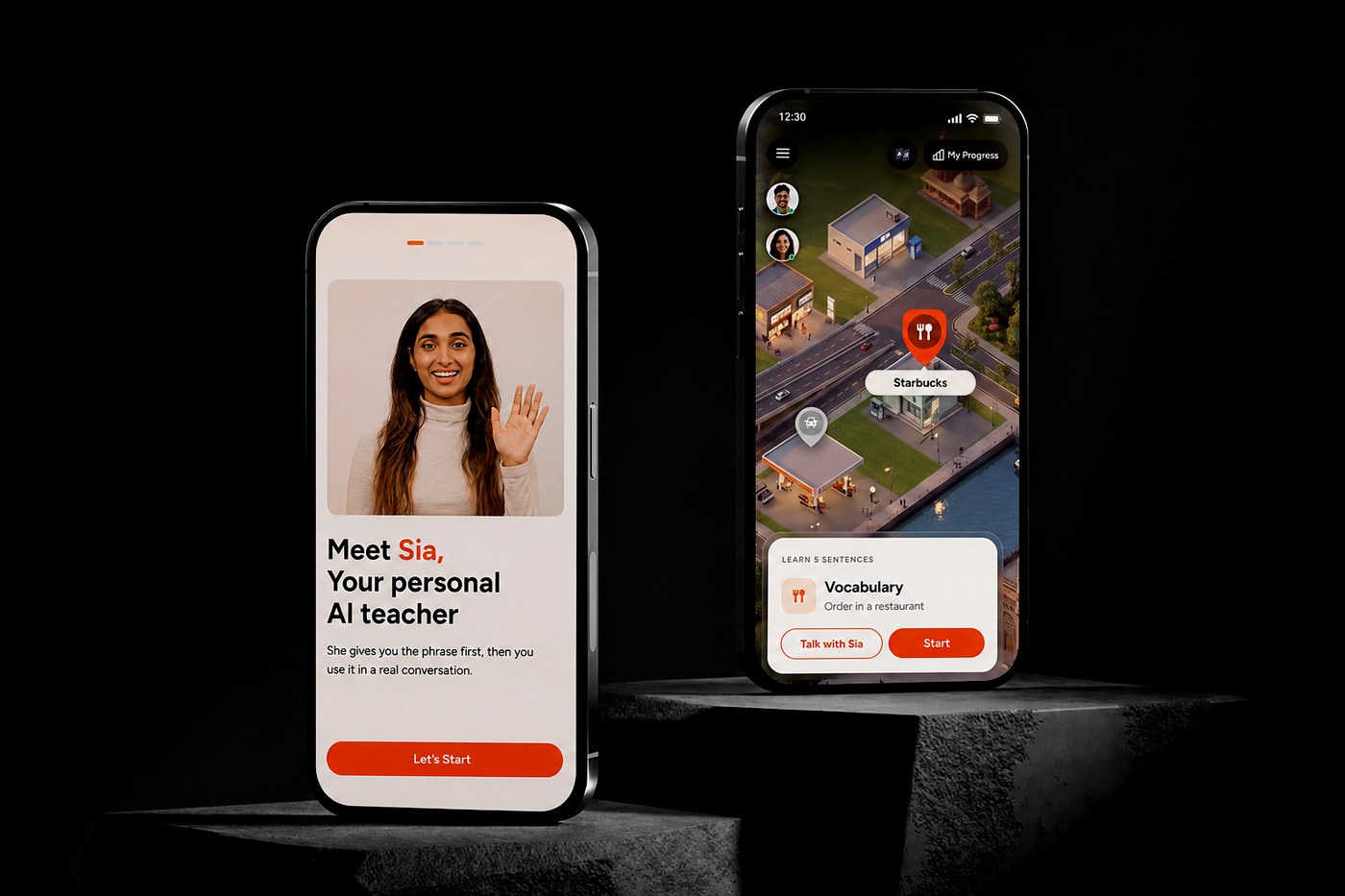
Moving from reading English sentences to speaking them takes feedback. SpeakX is an AI-powered English speaking app built for Indian learners: you say a sentence out loud, and the app tells you how your pronunciation landed, in English and Hindi.
The method stays the same whether you use an app or not: learn a few sentences, say them aloud, make variations, use them in a real conversation.
You don’t need to speak perfect English on day one. You just need to start speaking.
Frequently asked questions
What are simple English sentences?
Simple English sentences are short, easy-to-understand sentences used to communicate common ideas. They suit beginners because they can be practised and used in everyday conversations straight away.
How can I learn English sentences with Hindi meaning?
Start with a few common English sentences and their Hindi meanings. Say them aloud and create your own variations. Gradually work towards understanding the English directly instead of translating every sentence in your head.
How many English sentences should I learn in a day?
There is no fixed number. For beginners, five to ten a day is manageable if you actually practise them. Using the sentences matters more than memorising a long list.
Can these sentences help me speak English fluently?
They give you a foundation for everyday conversation, but memorising sentences alone does not create fluency. You also need regular speaking, listening, vocabulary and pronunciation practice. Our guide on how to speak English fluently covers the full plan.
How can I practise these English sentences at home?
Read them aloud, record yourself, create variations, and use them in imaginary conversations. Practising with a speaking partner or a speaking-practice app gives you feedback you cannot give yourself.
Ready to speak English with confidence?
Say each sentence out loud and SpeakX tells you how your pronunciation landed, in English and Hindi.